The orgasm clock nobody asked for
Let's be real. Somewhere along the way, orgasm stopped being a thing your body does and started being a thing you're supposed to deliver on schedule. Your partner's waiting. You've been going for a while. There's this invisible countdown happening, and your nervous system knows it.
So your body does what it always does under pressure: it tightens. Arousal flatlines. The orgasm gets further away the harder you chase it. Welcome to performance anxiety, the world's most efficient orgasm killer.
The strange part? This doesn't happen because you're broken. It happens because your brain is doing exactly what it's supposed to do. Pressure triggers your sympathetic nervous system (fight or flight), which is the opposite of what you need for pleasure.
Why pressure and pleasure are neurologically incompatible
Your nervous system has two main gears. The sympathetic system is built for threat response, productivity, and quick decision-making. The parasympathetic system is built for rest, digestion, and pleasure. You can't rev both at the same time.
When someone (including yourself) expects an orgasm by a certain time, your brain interprets that as a goal to achieve. Goals activate your sympathetic system. You start monitoring whether it's happening yet. You notice you're not there. You worry you won't get there. That worry floods your body with cortisol.
Corpus luteum of research shows that cortisol actively suppresses arousal. It's not a gentle interference. It's a full shutdown. Your body is literally protecting you from pleasure because your brain has decided pleasure is a performance you might fail.
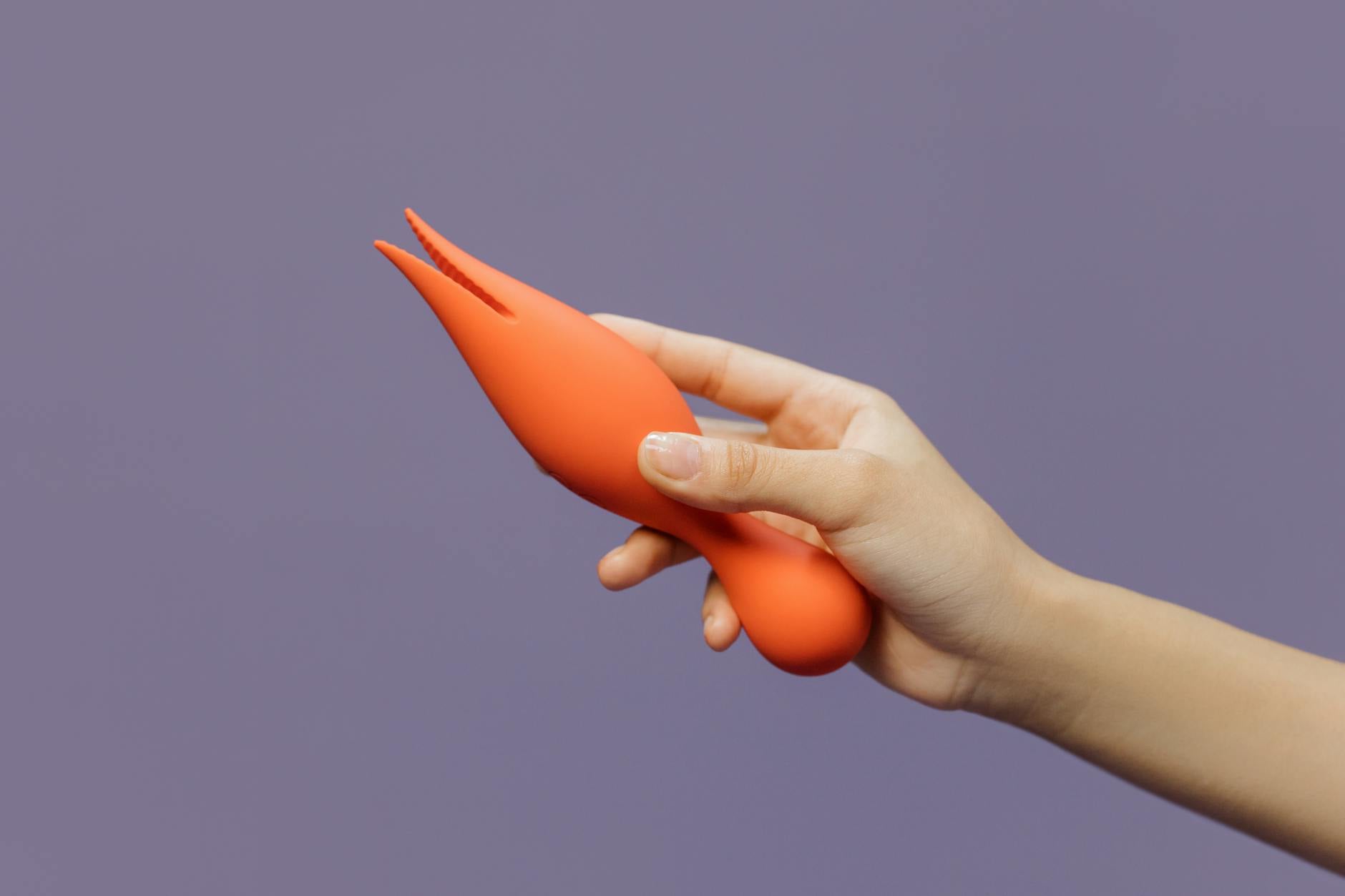
Lemon clitoral vibrators don't fix your nervous system directly. But they do something almost as useful: they shift the entire structure of how you experience pleasure, in a way that makes pressure harder to maintain.
The pressure shift that changes everything
Here's what happens when you use a lemon vibrator specifically to dissolve pressure instead of reach a goal:
First, sensation becomes the point instead of a checkpoint. With your hand or your partner's touch, you can still loop back into performance mode. You notice how it feels, mentally grade it, wonder if you're on track. A vibrator—particularly a powerful one like a lemon sexual toy—creates such direct, consistent sensation that your brain has to work harder to interrupt it with performance anxiety.
It's not that vibrators are magic. It's that the intensity of sensation is harder to argue with. Your attention stays in your body instead of drifting into worry.
Second, you regain control of the pace. When you're using a lemon clitoral vibrator solo, you choose the intensity, the rhythm, the moment you ramp up or pull back. There's no external timeline. Nobody's waiting on you. That autonomy is profound. It tells your nervous system: "This is safe. This is yours."
Third, you can actually explore plateau without collapsing. Pleasure doesn't move in a straight line upward to orgasm. It moves in waves. You build, plateau, build again. That plateau phase is where a lot of the anxiety lives, because it feels like something's stalled. With a lemon vibrator, you can ride that plateau deliberately instead of panicking.
How to use a lemon vibrator to rebuild pleasure without pressure
Three shifts matter here:
Start with zero expectation of an outcome. Sit with the lemon vibrator on low or medium intensity for 5-10 minutes with no goal except to feel what you feel. If your brain starts narrating ("Should something be happening by now?"), acknowledge it and return to sensation. This is harder than it sounds, because we're trained to optimize everything.
Focus on variety instead of intensity. Try different patterns on your clitoral vibrator. Move it slightly to change the angle. Notice how different parts of your vulva respond differently. This exploration mode keeps you in your parasympathetic system because you're curious instead of goal-oriented.
Let pleasure be enough. Most of us are taught that arousal is foreplay, and orgasm is the actual event. Pleasure for its own sake feels selfish or incomplete. It's not. Intense, sustained arousal without an endpoint is a complete experience. Your lemon clitoral vibrator can deliver that in a way that manual stimulation sometimes can't, because it doesn't need a break.
When your partner's involved and pressure still shows up
Honestly, the most important conversation here isn't about the vibrator. It's about explicit permission. Your partner needs to hear this: "I'm rebuilding my relationship with my own pleasure. That means sometimes I'm going to use this solo, and sometimes I'm going to use it with you present, but not working toward a specific outcome. My orgasm isn't a gift you're trying to win. It's not a score we're keeping. It's just my body doing something that feels good, on its own schedule."
That's not sexy talk. That's boundary-setting. And it's absolutely necessary.
If your partner needs reassurance, here's what you can tell them: using a lemon vibrator to dissolve pressure doesn't mean you don't want them. It means you're creating the nervous system conditions where you actually can be present with them, without that terror of underperforming.
The role of sensation without expectation
There's research on something called "non-goal-oriented sexual response," which is exactly what it sounds like. People who practice feeling pleasure without insisting it lead somewhere report higher arousal overall, more frequent orgasms, and significantly less sexual anxiety.
A lemon vibrator is a tool that supports that practice because it creates sustained sensation. You're not waiting for your hand to get tired or your partner to switch positions. You can stay with whatever's working as long as you need.
Some sessions, that will lead to orgasm. Some sessions, it won't. Both are legitimate. The moment you stop conflating "pleasure" with "orgasm," pressure starts to dissolve.
Managing the transition if you've been faking for years
If you've spent months or years faking it to manage your partner's expectations or your own shame about not being able to "perform," this shift takes time. Your body has learned that honesty is risky. Using a lemon clitoral vibrator can help you rebuild trust in your own responses because you're in control and there's nobody to disappoint.
Start with solo use. Give yourself permission to make sounds, move differently, and feel whatever comes up. Shame, anger, grief. Those are all part of reclaiming your nervous system.
If and when you bring your partner back in, how to use lemon vibrators when you feel insecure about your body has more on that specific conversation.
Why pressure dissolves when sensation becomes the anchor
Your nervous system can't hold two contradictory states at the same time. It's either in threat mode or pleasure mode. When you use a lemon vibrator to anchor yourself in sensation—particularly intense, novel sensation—your brain has less bandwidth to run the pressure narrative.
That's not magic. That's neurobiology. Sensation-focused activities (often called "sensate focus" in therapy) literally interrupt the performance loop because they demand attention.
The lemon vibrator is just the tool that makes that practice easier and more powerful than your hand alone can be.
FAQ: Pressure, pleasure, and lemon vibrators
What if using a vibrator feels like cheating if I'm with a partner?
That narrative usually comes from the idea that "real" pleasure has to happen a certain way. Lemon adult toys aren't a replacement for your partner. They're a tool to help you access your own nervous system in a way that actually makes partnered sex better, not worse. Research on couples who use toys together shows higher satisfaction across the board.
Can pressure anxiety go away, or will I always feel it?
It gets quieter. The first few times you deliberately choose pleasure without an outcome, your brain will probably panic a little. Keep going. After 5-10 sessions of actual sensation-focus work, most people report that the background hum of pressure diminishes significantly. Your nervous system learns it's safe.
If I orgasm sometimes with a vibrator but not always, am I still broken?
No. Orgasm variability is completely normal. Your clitoral vibrator is a tool to help you feel pleasure reliably, not to manufacture orgasm on demand. That's actually the point. The moment you stop requiring an outcome, the pressure dissolves and ironically, orgasms often become more reliable.
My partner feels threatened when I use a lemon vibrator. How do I navigate that?
That's a relationship conversation, not a vibrator conversation. How to use lemon vibrators with a new partner who wants to join in has more on that. Briefly: his comfort isn't your responsibility, but his willingness to work on his insecurity is. Clear boundaries help.
Should I use a lemon vibrator every time I want to feel pleasure?
Use it as much as you want. There's no quota. Some people find that bringing it in 2-3 times a week while doing other exploration the rest of the time gives them the best balance. The point isn't to depend on it. The point is to use it until your nervous system learns that pleasure without performance is possible.
Can I use a clitoral vibrator while dealing with trauma or past pressure?
Yes, and sometimes slower. If you have a history of sexual coercion or trauma, pleasure without pressure might feel genuinely dangerous to your system. That's not a problem with the tool. Consider working with a therapist who specializes in sexual healing alongside tool exploration. Your lemon clitoral vibrator can be part of reclaiming your body, but it's not the only part.
The liberation that comes from no agenda
The deepest shift isn't about the vibrator at all. It's about permission. Permission to feel pleasure without producing anything. Permission for your body to do what it does when it's safe.
A lemon vibrator can't give you that permission. Only you can. But it can create the conditions where that permission starts to feel real. Where sensation is loud enough to interrupt the pressure narrative, and your nervous system gets to remember what it feels like to simply feel good.
That's the whole point.
Sources & Research
- Basson, R. (2000). The female sexual response: A different model. Journal of Sex & Marital Therapy, 26(1), 51-65.
- Brotto, L. A., et al. (2012). Asexuality: A mixed-methods approach. Archives of Sexual Behavior, 41(3), 641-652.
- Komisaruk, B. R., & Whipple, B. (2005). Functional MRI of the brain during orgasm in women with complete spinal cord injury. Progress in Brain Research, 152, 127-138.
- Stevenson, R. W., et al. (2003). Corticotropin-releasing factor and sexual behavior in the male. Pharmacology Biochemistry and Behavior, 75(2), 367-375.