Let's name the thing nobody wants to admit
Body insecurity doesn't just kill the mood. It kills sensation itself. When you're in your head scanning your thighs or worrying about how your body looks during sex, your nervous system isn't primed for pleasure. You're bracing. You're performing. You're observing yourself like you're watching from the audience instead of being in the scene.
This is the actual problem with body insecurity and sex. It's not that your body is wrong. It's that self-consciousness short-circuits the neural pathways that carry pleasure.
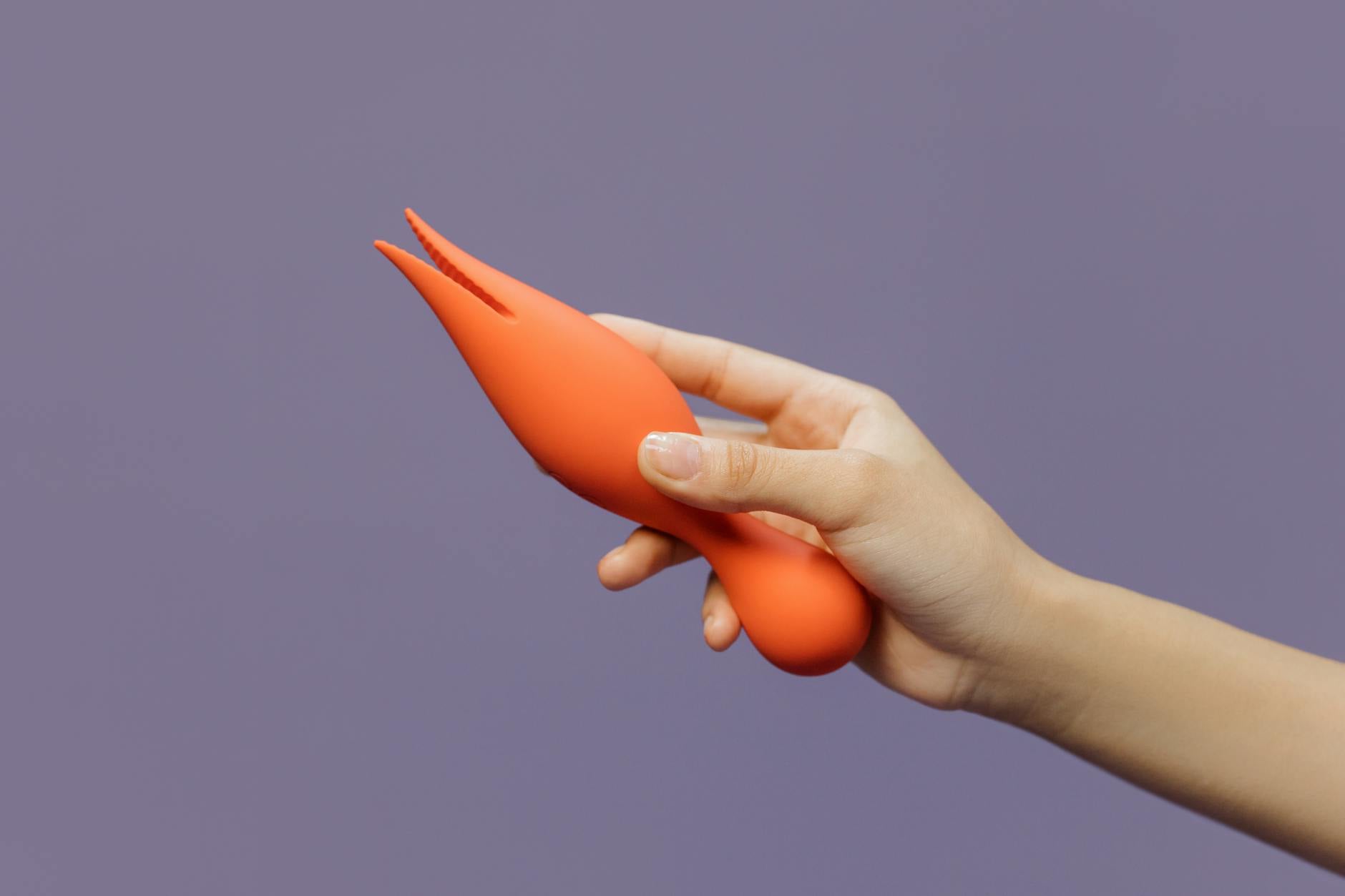
The good news: lemon clitoral vibrators have a specific advantage here. They work fast. They cut through the mental noise. And they do something unexpected: they teach your brain to feel before it can judge.
Why body insecurity silences pleasure
Your nervous system has two main states: safe or threat. When you're worried about how your stomach looks or whether your partner is noticing your stretch marks, your body reads that as a low-grade threat. Your system tenses. Blood flow that would otherwise move toward pleasure moves toward your muscles instead. Arousal literally slows down.
Then comes the cascade: slower arousal means less lubrication, which means you need to touch longer to feel the same sensation, which means more time for your brain to pile on more insecurity. It becomes a loop.
Women with lower body image report longer times to orgasm and fewer orgasms overall. Not because their bodies are less capable, but because their nervous systems are stuck in self-monitoring mode instead of sensation mode.
A clitoral vibrator like The Lemon breaks that loop because the stimulation is strong enough and consistent enough that it can cut through the mental static. You can't think and feel at the same time, not with real intensity. And intensity demands attention.
The shift from looking to feeling
Here's the practical part. When you pick up a lemon vibrator, you're making a small but real choice: you're saying that sensation matters more than appearance. You're not performing for anyone. There's no "good angle" involved. There's just your nervous system and something built to light it up.
Start alone. I need to say that clearly. Body insecurity often gets worse when a partner is involved because now you're worried about being watched. Solo play removes that layer entirely. You're not auditioning for approval.
When you use a lemon sexual toy by yourself, focus on the feedback loop instead of the visual. Where do you feel the most sensation? Is it at the top of the clitoris, the sides, the hood? Different people respond to different areas. A suction-style lemon clitoral vibrator moves around slightly. That movement helps you discover what your actual sensitivity map looks like, not what you think it should be.
This sounds small. It's not. Knowing exactly where you feel the most pleasure is a form of reclamation. You're gathering data about your own body that has nothing to do with how it looks and everything to do with what it can do.
The speed factor
Lemon vibrators don't require you to warm up as much as other stimulation does. This matters for body insecurity specifically. Less warm-up time means less time for your brain to spiral. You feel the effects within seconds. Your body starts responding before your mind can generate doubt.
Start with a lower pattern on The Lemon. You're not chasing the strongest sensation yet. You're letting your nervous system understand that this is safe and that pleasure is coming. That usually takes 2-3 minutes. By then, your system has shifted into actual arousal, and the self-consciousness has mostly evaporated.
Most of my clients who struggled with body image report that by the time they reach higher intensities on a lemon vibrator, they've stopped thinking about their bodies altogether. They're just feeling. That's the win.
When you're ready to include a partner
This is where many people get stuck. They've reclaimed solo pleasure but still feel shy about using a vibrator with someone else. That's actually a different problem than body insecurity. It's more about permission and communication.
If your partner is curious, frame it clearly: "I've found that when I can focus on what feels good instead of how I look, I'm more present with you." That's the truth. Pleasure shared is better than pleasure performed. Most good partners get that immediately.
If you want to use a lemon adult toy during partnered sex, the least self-conscious setup is usually when you're already undressed and your partner is already inside the moment with you. You're not introducing something new into an existing tension. You're deepening something already happening.
Some couples find that having an external focus (the vibrator) actually reduces body consciousness for both people because attention moves to the sensation rather than the bodies. It's a redirect, not a performance piece.
The permission piece
Body insecurity often lives underneath a lot of old beliefs about what "good sex" looks like. If you grew up with the idea that real pleasure should happen without props or that using a vibrator means something is wrong with you, that's where the actual shame lives. Not in your body. In the permission.
Lemon vibrators aren't a workaround for a broken body. They're a tool for a nervous system that's been trained to observe itself instead of inhabit itself. That's different. And once you really understand the difference, the insecurity starts to shift.
Your body isn't the problem. The thought loop is the problem. And a well-designed lemon clitoral vibrator is surprisingly good at interrupting that loop and teaching your nervous system that pleasure is the priority.
Once your body gets that message through direct sensation, it remembers. The insecurity doesn't disappear overnight, but it stops having the same power over your pleasure. And that's the actual goal.
People also ask
Can a vibrator actually help with body image issues during sex?
Yes, but not directly. A vibrator doesn't change how your body looks. What it does is create strong enough sensation that your brain has to focus on feeling instead of observing. When you're experiencing intense pleasure, self-criticism goes quiet. It's not willpower or positive thinking. It's neurology. Over time, as you associate your body with real pleasure instead of judgment, the insecurity loosens its grip.
Is it normal to feel self-conscious using a vibrator with a partner present?
Completely normal. You're adding a new variable to an already vulnerable situation. Most people feel some awkwardness the first time. The key is separating two things: worrying about how the vibrator looks and worrying about how your body looks. Usually, once the vibrator is actually in use and you're feeling sensation, both worries fade. You're too busy experiencing to perform.
What if my partner thinks using a vibrator means I'm not satisfied with them?
That's a communication thing, not a vibrator thing. A direct conversation works best: "I want to try this because I feel better and more present when I can focus on sensation instead of how I look. That makes me better with you too." Most partners care more about your pleasure than they care about being the only source of it.
Should I practice with a lemon vibrator alone before using one with a partner?
Yes. Solo practice does two things. First, it teaches your nervous system that vibration equals pleasure, which builds confidence. Second, it removes the performance element entirely. You learn what patterns feel good, what intensity works, and how your body responds without anyone watching. That knowledge carries into partnered sex and makes the experience less self-conscious.
How long does it take for body insecurity to stop affecting my pleasure?
It's not linear. Some people notice a shift after a few solo sessions. Others need several weeks of regular practice before the nervous system really updates its expectations. The important thing is consistency. Your brain changes through repeated experience, not through trying harder.
Can I use a lemon sexual toy if I feel numb or disconnected from my body?
Yes. In fact, that's one of the best uses. Numbness often comes from chronic disconnection or self-monitoring. A strong, consistent stimulus like a lemon clitoral vibrator can help rewire the nerve pathways and rebuild sensation. Start slow and give yourself patience. Your body will respond, sometimes more slowly than you'd like, but it responds.
The actual path forward
Body insecurity doesn't disappear because you decide to feel confident. It loosens because you give your nervous system repeated evidence that your body is capable of real sensation and real pleasure. A lemon vibrator is one of the fastest ways to generate that evidence.
Start solo. Focus on sensation instead of appearance. Let the speed and consistency of the vibration do the work of interrupting the self-monitoring loop. Then, once you've rebuilt that connection for yourself, bringing it into partnered intimacy becomes easier.
Your body isn't the problem. The thoughts are the problem. And the cure isn't more thinking. It's more feeling. That's what a well-made vibrator does best.
If you want to explore how lemon vibrators might fit into your pleasure practice, or if you're navigating relationship dynamics around intimacy and insecurity, I'm here. Reach out anytime.