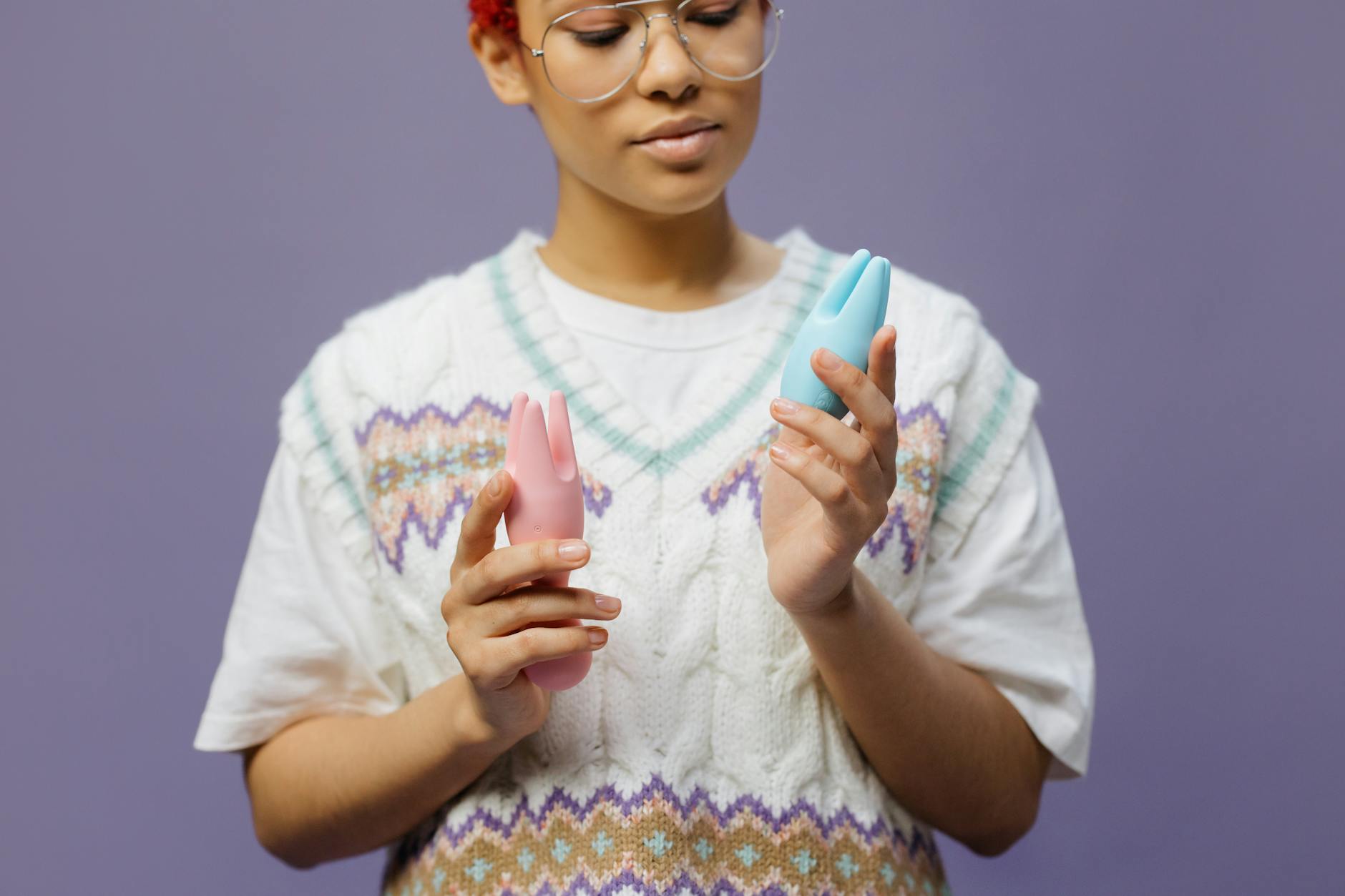
Why Lemon Clitoral Vibrators Work Better Than Traditional Vibrators After 40
Your body changed. Your pleasure shouldn't have to. Here's why lemon suction vibrators feel dramatically different (and better) than the traditional vibrators you tried years ago.
Let's be real. If you tried a traditional vibrator five, ten, or twenty years ago and found it either too intense, weirdly numb, or just meh, there's a reason you're feeling different about it now. And it's not that your sensitivity died. It's that your tissue changed, and traditional vibration was designed for tissue that looked different than yours does today.
Estrogen starts declining in your forties, and this has real consequences for your vulva. The outer labia gets thinner. The clitoral hood thins too. Blood flow to the clitoris doesn't respond as quickly to arousal cues. The tissue is more delicate, not in a broken way, but in the way that matters for how stimulation feels.
Most people assume this means sensation goes down. It doesn't. It means the same vibration intensity that felt good at 28 now feels like someone's literally buzzing your nerve endings raw. You're not numb. You're overstimulated.
That's the opposite problem from what sex ed taught us to expect.
A traditional vibrator works through rapid back-and-forth motion. Think of it like a tiny jackhammer on your most sensitive nerve cluster. At 28, with thicker tissue and robust blood flow, that's pleasant stimulation. At 42, with tissue that's thinned by hormonal shifts, it can feel harsh, irritating, or even painful.
The vibration is also constant. There's no rhythm, no building, no release. Just buzz, buzz, buzz for as long as you hold it there. For some people that's meditative. For people with thinner tissue, it's exhausting.
Lemon clitoral vibrators, like the Lemon, use suction instead of pure vibration. Instead of beating against your tissue, suction creates a gentle pulse that stimulates from above and around the clitoris, not directly on top of it. It's less like a jackhammer and more like a rhythm.
The suction motion does three things your traditional vibrator can't:
It distributes pressure more evenly across the clitoral structure instead of concentrating all intensity on the most delicate part. It creates a sensation of fullness and building, rather than constant, stationary buzz. It works with your natural arousal response, deepening as you become more aroused and your tissue swells.
For people over 40, this changes everything. You're not fighting against your tissue's new reality. You're working with it.
Here's what stays the same: your clitoris has roughly 8,000 nerve endings whether you're 25 or 55. Those nerves don't go anywhere. But the tissue that surrounds them got thinner, which means traditional vibration is hitting a smaller, more delicate target. It's like pointing a fire hose at a garden instead of using a watering can.
Suction-based stimulation spreads that sensation across a wider area. You're activating more of the surrounding tissue, which means more nerve endings are involved, but with less intensity on any single point. The result is intense sensation without the rawness.
Most people report that their first experience with a lemon vibrator feels completely different from traditional vibrators they've tried. Not better in every context, but better for what their body actually needs now.
When you're shopping for pleasure at any age, you probably assume more vibration modes means more options. But intensity is actually the variable that matters most for post-40 pleasure. A traditional vibrator with 10 intensity levels might start at "way too much" and go up to "please make it stop." A lemon clitoral vibrator with 3 levels might have you covering the exact range you actually need.
The reason is tissue tolerance. Your vulva can handle suction stimulation at intensities that would make traditional vibration feel painful. This isn't sensitivity loss. It's efficiency. You're getting more usable pleasure from lower absolute intensity because of how the stimulation is distributed.
This is why so many people over 40 find that their most intense orgasms come after they switch from traditional to suction-based toys. It's not magic. It's physics meeting biology.
Traditional vibrators want to go from zero to 60 instantly. That works when your blood flow jumps to attention immediately. After 40, arousal is slower to build and slower to crest. You need time.
Lemon clitoral vibrators actually work better with a slower start because suction can build gradually. You're not choosing between "off" and "assault my clitoris." You can start at a level that feels gentle, let your arousal respond, and then increase as sensation deepens. Most people find they don't need 45 minutes of foreplay. They just need a toy that doesn't demand they sprint to the finish line.
If you've been avoiding pleasure because foreplay felt tedious or intense toys felt uncomfortable, this is the practical difference that matters.
After 40, comfort shifts from "nice to have" to "requirement." You're not going to force yourself to use something that irritates you, and you shouldn't have to. The fact that traditional vibrators felt wrong isn't a sign that you should push through it. It's a sign that your tissue and the tool are mismatched.
Lemon clitoral vibrators are quieter, gentler on delicate tissue, and they don't require lubrication the way some traditional vibrators do. If you've struggled with dryness or sensitivity after hormonal shifts, a lemon vibrator often feels more comfortable immediately.
Comfort isn't about being lazy or prudish. It's about actually enjoying yourself. And that changes everything about consistency and pleasure.
This isn't an indictment of traditional vibrators, full stop. Some people's bodies respond beautifully to rapid vibration at any age. Some people's arousal ramps up fast. Some people find suction toys too intense. Your body isn't wrong if it prefers something else.
But if you've been assuming your pleasure capacity dropped after 40, and you haven't tried suction-based lemon clitoral vibrators, you're probably working with incomplete information. The texture of your tissue changed. The tools designed for that tissue changed too. It's worth exploring what actually works for you now, rather than assuming what worked (or didn't work) five years ago still applies.
Many people find they want both types of toys. Suction for intense, focused pleasure. A gentler traditional vibrator for extended play or partnered pleasure. The point is having options that actually fit your body.
This isn't nostalgia talking. Suction-based vibrator design has improved dramatically in the past decade. The Lemon and other lemon vibrators offer ergonomics, battery life, and material quality that didn't exist when you were 30. If your last vibrator was from the early 2010s, you're comparing yourself to technology from a different era.
The motors are quieter. The materials are body-safe silicone instead of mystery jelly. The intensity levels are actually calibrated to deliver sensation, not just noise. And the designs work with post-40 tissue instead of against it.
You're not starting from zero. You're upgrading to a tool designed for your current needs.
If you're thinking about exploring lemon clitoral vibrators, start with the lowest intensity and give yourself at least three sessions to understand how it feels. Your nervous system needs time to recognize a new sensation as pleasure instead of weirdness. By session three, most people find they're either absolutely here for it or they're definitely not, and either answer is useful information.
Water-based lubricant helps, even if you don't think you need it. It softens the sensation and makes everything feel more fluid. Spend longer building arousal than you think you need. Lemon vibrators reward patience. And if you're with a partner, let them watch or participate. Sometimes seeing how your body responds actually deepens their understanding of what you need.
The goal isn't to force yourself to like something new. It's to give your actual, current body a fair chance with tools designed for how you feel now.
Not necessarily, but most people find that water-based lube makes the sensation smoother and more comfortable. Lube isn't a sign of failure. It's a tool that lets your body focus on pleasure instead of friction. If dryness is a significant issue beyond toy use, that's worth mentioning to your doctor. Hormonal changes or medications can affect lubrication, and there are options.
Possibly at the same intensity setting, but you'll likely find you want similar or higher sensation because of how suction distributes stimulation. Most people need 2-3 sessions to calibrate where they actually enjoy the intensity. It's not less sensation. It's sensation that doesn't make you feel raw afterward.
Many people with light sensitivity or mild vulva pain actually find suction vibrators more comfortable because there's less direct friction. But if you're dealing with significant pain, that's something to discuss with a pelvic health specialist first. A toy isn't a treatment for pain conditions. If you're managing light sensitivity, starting at the lowest intensity and building gradually usually helps.
Slightly. Your nervous system recognizes traditional vibration immediately because it's basically friction. Suction is a different sensation, so it can take a couple of uses to feel natural. But most people report that once it clicks, it becomes their preferred choice. The learning curve is usually positive surprise, not frustration.
The best toy fits your specific anatomy. Lemon vibrators work beautifully for a wide range of people, but if you have a larger clitoris or prefer direct stimulation, you might find traditional vibrators more satisfying. The point isn't that one type is universally better. The point is that after 40, your tissue often needs something different than it did at 25, and lemon vibrators are specifically designed for that.
Lemon vibrators work great both ways. Some people use them during partnered sex for their own pleasure while their partner is inside them or touching them elsewhere. Some use them during foreplay. Some use them solo. The intensity and sensation don't change based on context. It's whatever feels good to you and your partner.
Most rechargeable lemon vibrators last 1-2 hours of continuous use on a full charge. Real-world pleasure sessions are usually 15-30 minutes, so a single charge covers multiple uses. Charging takes 60-90 minutes, and most people charge monthly or weekly depending on frequency. It's one less thing to think about compared to traditional vibrators that kill batteries quickly.
Your body changed after 40. That's not loss. That's evolution. And the tools you use for pleasure should evolve with you. Traditional vibrators were designed for younger tissue. Lemon clitoral vibrators are designed for what your body actually is now. Not better. Not worse. Different, and sometimes dramatically more suited to what you actually need.
If you've avoided pleasure because traditional toys felt wrong, or if you've assumed your capacity for intense sensation dropped, it's worth giving yourself permission to try something designed for post-40 bodies. The pleasure you're looking for might be waiting on the other side of that choice. Check out our buying guide to explore options that might fit your needs, or reach out if you want to talk through what might work best for you.