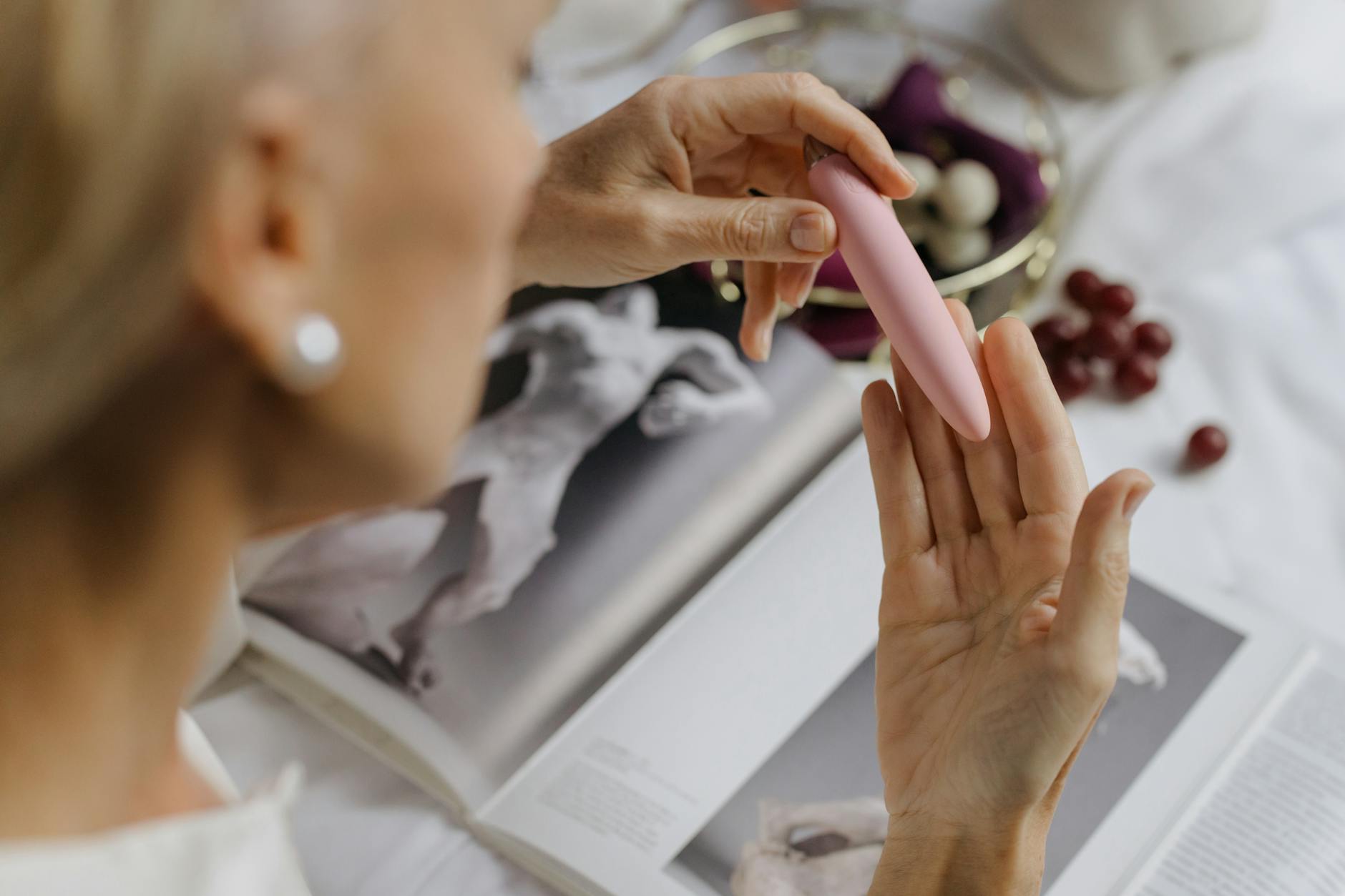
Here's the thing about coming back online
Hormonal shifts don't flip a switch. They dim the lights. And when sensation slowly returns, it doesn't announce itself with a fanfare. It creeps back in piecemeal, sometimes over weeks or months, and if you're not paying attention, you'll miss it entirely.
That's where most people get stuck. They expect to wake up one morning feeling like themselves again, and when that doesn't happen, they think something's broken. It isn't. Your nervous system is recalibrating. And the way you use a lemon clitoral vibrator during this phase matters far more than you'd think.
Why gradual sensation return feels so different
When your hormones shift, your clitoral tissue becomes less responsive at first. Estrogen drops, which thins the tissue and reduces blood flow. Your brain chemistry changes too. Serotonin and dopamine don't spike as quickly in response to stimulation. This isn't failure. It's transition.
As your body stabilizes on new hormonal ground, sensation doesn't jump back to baseline all at once. Instead, you'll notice small moments. A touch that lands differently. A vibration pattern that suddenly feels more intense than it did last week. Your arousal curve getting slightly steeper. These are signs your nervous system is healing, and they happen in waves.
The mistake most people make is treating their body like it's broken during this phase. They use their lemon vibrator on high intensity, pushing for the same response they used to get, and then feel defeated when it doesn't work. That approach actually sets recovery back. Pressure kills sensation every single time.
The pacing framework that actually works
I work with this approach with clients in relationship therapy, and it translates directly to solo pleasure.
Weeks 1-2: Observation mode. Don't chase sensation. Use your lemon sexual toy on the lowest settings, the ones that feel almost too gentle. You're not trying to climax. You're mapping what sensitivity you have right now. Spend 10-15 minutes touching yourself, noticing which spots light up first, which vibration patterns feel present versus numb. This isn't boring. This is research.
Weeks 3-4: Gentle escalation. Once you know your current landscape, start moving to pattern 2 on your lemon vibrator, still at low duration sessions. Maybe 15-20 minutes. You're looking for moments of "that actually felt like something." Don't push for orgasm. Just notice when sensation deepens. Your nervous system needs permission to go slowly.
Weeks 5-8: Pattern exploration. By now you've probably felt some return. This is the phase where you start trying different patterns on your lem vibrator. Some might feel too intense still. Others might feel like they're landing in completely new ways. Your clitoris is waking up unevenly, and some patterns will align with that recovery better than others.
Month 3 onward: Confidence building. As sensation stabilizes, you can increase duration and intensity, but you're still moving gradually. This isn't the time to jump to the strongest pattern and expect immediate returns.
The lemon vibrator patterns that help during recovery
Not all vibration is equal when you're rebuilding sensation. Some patterns work with your recovering nervous system. Others work against it.
Pattern 1. The gentle pulse. This is your home base during recovery. It's rhythmic without being jarring. It teaches your nervous system that sensation is safe and consistent. Spend weeks here if you need to. There's no prize for moving faster.
Pattern 2-3. The stepping patterns. Slightly more texture, but still predictable. These help your nervous system distinguish between stimulation levels, which is actually the first step in rebuilding intensity perception. Use these to start mapping what feels like "more" versus "less."
Pattern 4-5. The variable rhythms. These show up once you have some baseline sensation back. They're interesting enough to maintain focus without being overwhelming. This is where boredom usually lifts and actual engagement returns.
Skip the intense patterns entirely during early recovery. I know they exist. I know you want to feel something. But your body's rebuilding its signals, and overwhelming it right now actually teaches your nervous system to shut down faster next time. That's the opposite of what you want.
Setting up for success: the environment piece
Hormonal recovery happens in your body, but your environment either speeds it up or sabotages it.
Your nervous system needs to feel safe to open up. That means privacy, time, and zero rushing. If you have 45 minutes and 15 minutes of that is listening for footsteps, your body will stay guarded. A locked door. Headphones if you need them. A time block where you're actually present.
Lubricant matters too. During hormonal shifts, even if you feel like you don't need it, your tissue is thinner and deserves extra care. Water-based lube isn't a sign of dysfunction. It's a sign of respect for your body during a transition. Warm it up a bit in your hands first, so the temperature matches your skin.
Starting with external touch is smarter than jumping straight to your lemon vibrator. Spend 5 minutes just touching yourself, noticing sensitivity. Warm your body up. Then introduce the vibrator. This signals to your nervous system that sensation is building gradually, not appearing out of nowhere.
The mental game: patience is not the same as settling
Here's what I tell couples rebuilding intimacy after hormonal shifts. Patience with your body isn't resignation. It's strategy.
When you use your lemon clitoral vibrator on that slow setting in week two and feel almost nothing, that's not a sign to give up. That's information. Your body's saying "I'm still waking up." If you push through with frustration, you're adding cortisol and tension to a system that's already stressed. That slows everything down.
Instead, notice what you're feeling. Even if it's subtle. Even if it's just "my clitoris registered that vibration." That's success. Celebrate it. Your nervous system responds to acknowledgment.
Many people find that once they stop chasing intense sensation and start honoring whatever's present, sensation actually deepens faster. The paradox is real. Relaxation accelerates recovery more than forcing ever will.
When to check in with a healthcare provider
Gradual sensation recovery over weeks or months is normal. A year of zero sensation while your hormones are stable is not. If you're at month four of recovery and haven't noticed any shift despite consistent, gentle practice, talk to a doctor.
It could be a thyroid issue, a side effect from another medication, depression, or something straightforward that's very treatable. A pelvic floor physical therapist is also worth exploring. Sometimes what feels like hormonal numbness is actually pelvic floor tension preventing blood flow. One session often changes everything.
Rebuilding solo is practice for partnership
If you have a partner, the pacing you learn during solo recovery translates directly. When your partner understands that you're in gradual-return mode, you can ask for the same patient approach they'd give a recovering nervous system. Longer foreplay. Gentler initial touch. Permission to focus on sensation rather than performance.
This is actually when many couples report the deepest reconnection. You're not rushing through a routine. You're exploring together, learning each other's recovering body in real time. That's intimacy at its most honest.
The long view
Hormonal changes are temporary. Your capacity for pleasure isn't. You might spend a few months rebuilding, but you're building on a foundation that's solid. Thousands of people have walked this path and come out the other side with sensation more nuanced, more intentional, and honestly more satisfying than before.
Your lemon vibrator isn't a workaround. It's a tool for learning your body in transition. Use it with patience, adjust as you go, and trust that the sensitivity returning is exactly on schedule, even if the schedule feels slower than you'd like.
Common questions about sensation recovery and vibrators
How long does sensation typically take to return after hormonal changes?
It varies widely, but most people notice gradual shifts within 6-8 weeks of consistent, gentle exploration. Some feel changes within 2-3 weeks. Others take 3-4 months. Hormones are individual. Your timeline isn't wrong if it's slower. What matters is that you're noticing incremental shifts, not expecting an overnight reset. A lemon clitoral vibrator helps you track those tiny shifts because the sensation is consistent, so you can feel what's changing in your body rather than in the toy.
Can using a vibrator slow down sensation recovery?
It can if you're using it aggressively. Pushing for intense sensation before your nervous system is ready actually teaches your body to numb out as a protection mechanism. But gentle, patient use accelerates recovery. The key is matching intensity to where you actually are, not where you want to be. Start low, stay there longer than feels necessary, and progress only when sensation noticeably deepens.
Should I stop using my lemon vibrator if I'm not feeling much?
No. That's actually when consistency matters most. Think of it like physical therapy. You don't stop stretching because the range isn't back yet. You stretch gently and consistently so it comes back. Same with your clitoris. Gentle, regular stimulation teaches your nervous system that sensation is safe, which speeds recovery. Stopping reinforces the numbness.
Is there a difference between pleasure and sensation during recovery?
Absolutely. Early in recovery, you're rebuilding sensation, which is pure physical awareness. Pleasure comes later, once sensation is present enough for your brain to engage with it. Don't confuse the two. If you're only feeling physical vibration with no emotional engagement, you're right where you should be at week two. Pleasure will layer in as sensation builds.
Can stress slow down sensation recovery?
It absolutely can. Cortisol and adrenaline suppress blood flow to peripheral tissues, which is where clitoral sensitivity lives. If you're stressed about recovery itself (a common spiral), you're working against your body. That's why the environment and mental approach matter so much. Lower stress, lower pressure, actually speeds the physical recovery. It sounds paradoxical, but it's neurobiology.
What if my partner wants to help during sensation recovery?
That's wonderful, but the framework changes slightly. Have them start with touch, no vibrator. Let them trace where you're feeling sensation. Manual stimulation is gentler than vibration when you're early in recovery. Once you've rebuilt some baseline sensation solo, bringing a partner in becomes genuinely fun instead of frustrating. You'll know what patterns work and can communicate clearly. Solo recovery actually makes partnered recovery deeper.
References and sources
- American College of Obstetricians and Gynecologists: Genitourinary Syndrome of Menopause
- International Society for the Study of Women's Sexual Health: Hormonal Changes and Sexual Response
- Journal of Sexual Medicine: Neural Plasticity and Sensation Recovery Post-Hormonal Shift
- Gottman Institute: Intimacy Rebuilding After Life Transitions