
Let's name what's actually happening
Your body responds fast. That's not a problem. That's data. And the fact that you're sensitive enough to peak quickly during partnered sex means your nervous system is wired for pleasure, which is honestly the opposite of dysfunction.
But here's the friction: speed works against connection. When orgasm arrives before your partner's arousal ramps up, or before you've both settled into rhythm, the experience fractures. You're left with either the shame script ("I finished too soon") or the frustration of having to either hold back or start over.
Lemon vibrators, specifically their suction-based design, can actually retrain your arousal arc. Not by numbing you, but by giving you a tool that lets you explore control, stamina, and sync with precision.
Why sensation peaks so fast (and why it matters)
Three physical reasons this happens:
You're built for intensity. Some people's clitoral nerve density is higher, blood flow responds quickly to stimulation, and the pelvic floor muscles fire faster. This isn't rare, and it isn't pathological. It's your particular wiring.
Partnered sex changes the dynamic. Solo play gives you control over rhythm, pressure, and pacing. A partner adds variables: their arousal, their timing, their expectations. That loss of control can actually speed things up because your nervous system is managing multiple inputs at once.
Mental load accelerates climax. If you're anxious about timing, worried your partner will lose interest, or performing rather than feeling, your body responds by finishing faster. The brain is literally telling your nervous system to hurry up.
The lemon vibrator's role in building stamina
Here's what makes lemon clitoral vibrators different from traditional vibrators for this specific challenge.
Tradditional vibrators deliver consistent oscillation, which can feel like an escalator to climax. By design, they push sensation higher and higher until you reach the peak. That works great if you want a quick solo orgasm. It doesn't help if you want to lengthen arousal or find plateaus.
Lemon suction vibrators (like the Lem) work differently. The suction creates a gentler, broader stimulation pattern that engages multiple nerve endings without the building intensity of a standard vibrator. You can:
Stay at arousal plateau without immediately tipping toward orgasm. Switch settings down and back up without losing momentum. Use lower intensity levels during partnered sex and still feel plenty of sensation.
Building control: the solo warm-up strategy
Before you use the Lem during partnered sex, do this alone first.
Set aside 15-20 minutes. Start on pattern 1 or 2 (the lowest settings). The goal is not to chase orgasm. The goal is to get comfortable staying in arousal without finishing.
Spend 3-5 minutes at each intensity level. Notice what the sensation feels like. When you feel the urge to climax building, dial the intensity down. Wait 30-60 seconds. Then go back to where you were.
This teaches your body that you have a throttle. You're not racing toward a finish line. You're exploring the landscape.
Do this 3-4 times solo before you involve a partner. Your nervous system needs the repetition to rewire the automatic "go faster" response.
During partnered sex: three approaches
Approach 1: Pacing through intensity levels. Start with the Lem on pattern 1 while your partner builds their own arousal. As they get closer to climax, you stay where you are or move up slowly. This keeps you synced without either person hitting the peak too early.
Approach 2: Pause and reset. Use the Lem right before partnered penetration or external stimulation. Once you're together, pause for 30-60 seconds. Let arousal settle. Then resume. This interruption sounds clunky but is genuinely helpful. Your body learns that climax doesn't have to be continuous.
Approach 3: Divided attention. Have your partner hold or guide the Lem while you focus on them. This shift in agency (you're not controlling the sensation) often slows arousal naturally. You're managing external input instead of ramping yourself up.
The psychological layer you can't skip
Speed also responds to shame. If you've internalized a story that finishing quickly means you're broken or selfish or undeserving of pleasure, your body will actually finish faster as a nervous system self-soothing response.
Reframe this with your partner explicitly. Say: "I want to explore slowing down together. Not because anything's wrong, but because I want more time with you." This shifts the narrative from deficiency to intention.
Some partners have been taught that their pleasure shouldn't take priority. If that's you, that belief is sabotaging the whole experience. Your pleasure is not a side effect of partnered sex. It's the point. Your partner's arousal and yours both matter equally.
If you're the partner with someone who peaks quickly, your role is to normalize that conversation. "What would feel good for you?" is the question that opens everything up.
Breathing and pelvic floor awareness
Two somatic tools that work hand-in-hand with the Lem:
Breath. Most people hold their breath as sensation builds. That tightens everything, including the nervous system, which speeds climax. Instead: inhale for 4 counts, exhale for 6. The longer exhale activates your parasympathetic nervous system (the slow-down system). Do this while using the Lem during partnered play.
Pelvic floor relaxation. The impulse is to clench as sensation builds. That makes everything more intense. Instead, practice releasing the pelvic floor between uses of the Lem. A few Kegel-style squeezes followed by a full release teaches your body that tightening is not the only option.
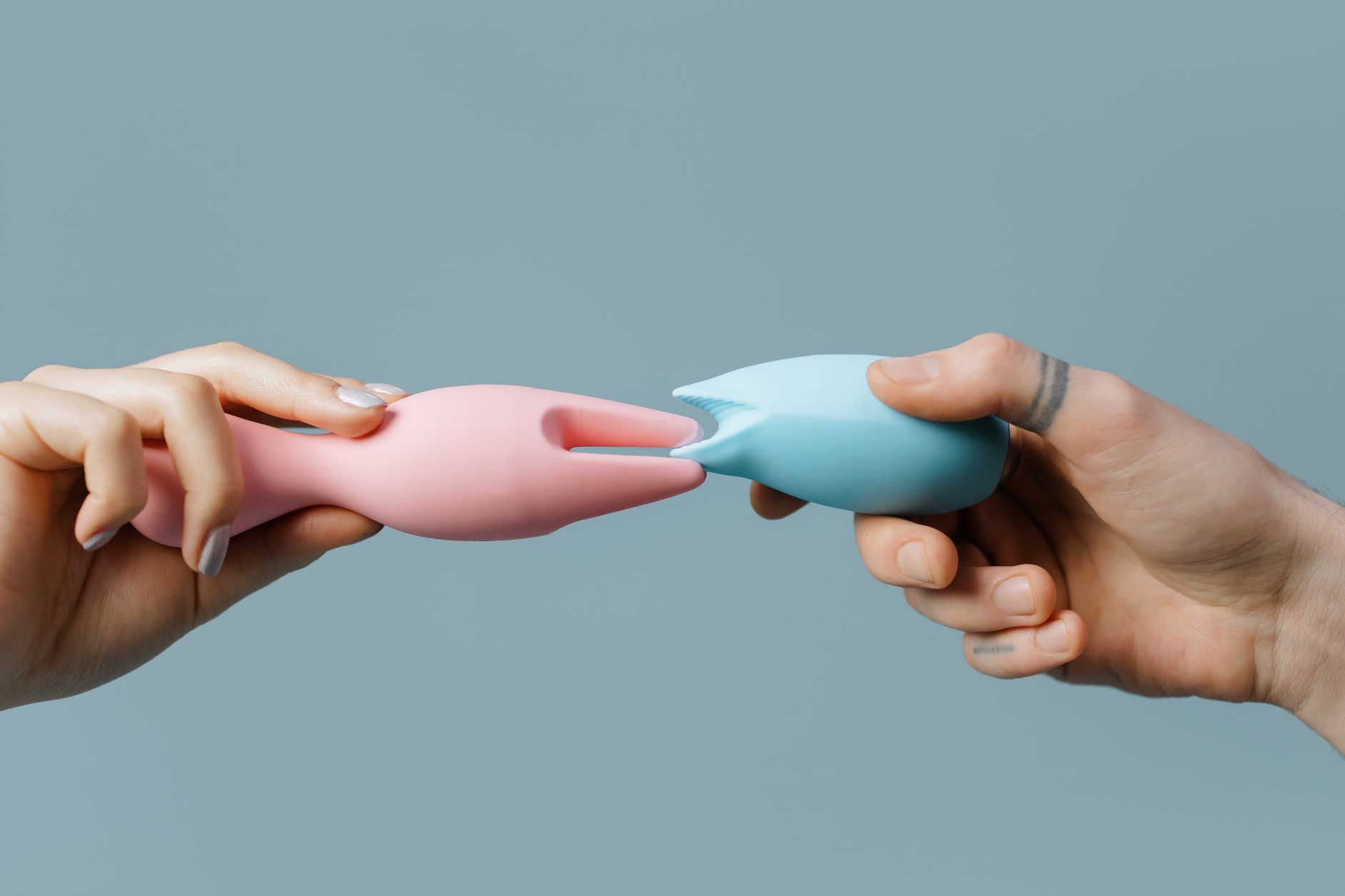
Photo by cottonbro studio on Pexels
The timeline for real change
You won't rewire arousal in one session. Expect 4-6 weeks of consistent solo practice before you notice a shift. This isn't because you're doing something wrong. This is because nervous system patterns take repetition to change.
That's actually good news. It means you have agency. You're not waiting for biology to shift. You're actively teaching your body a different response.
Some people find that once they've built stamina solo, partnered sex naturally catches up. Others use the Lem during partnered play indefinitely and that's fine too. There's no "graduation" moment where you stop using it. You use what works.
When to get external support
If you've been building stamina for 8+ weeks with no shift, or if fast climax is paired with anxiety that's actually affecting your relationship, a sex therapist or relationship counselor can help diagnose what's underneath the speed. Sometimes it's physiological (certain medications can do this). Sometimes it's relational. Usually it's both.
A Gottman-trained couples therapist can also help you and your partner build the communication skills to talk about this without shame. Because speed isn't the real problem. Disconnection is.
FAQ: Common questions about lemon vibrators and pacing
How do I tell my partner I want to use the Lem during sex without it feeling awkward?
Start with curiosity, not apology. "I found something that helps me feel more in control of my arousal. Want to explore it together?" leads with agency, not dysfunction. If your partner has their own insecurities, this might touch them. That's actually useful information about what needs talking through. Check out this guide on how to use lemon vibrators with a new partner for deeper conversation strategies.
Can I use the Lem to slow down if I'm already in the middle of partnered sex?
Yes, but it works better as a prelude than an interruption. If you're already deep in arousal, pausing to grab a toy can break momentum. Better approach: use the Lem for 5-10 minutes beforehand, then transition into partnered play. Your arousal will be lower by design, which gives you more buffer.
What if my partner gets upset that I'm using a toy? Does that mean something about our dynamic?
It might. Or it might mean they need reassurance that the toy isn't replacing them. Use language like "This helps me last longer so we can be together longer" rather than "I need this instead of you." If they're still resistant after that conversation, consider whether there are deeper fears about adequacy or control in the relationship. A couples therapist can help unpack that. If you're looking for more strategies, how to use lemon vibrators when your partner wants to watch has specific tactics.
Is there a risk the Lem will make me even more sensitive over time?
No. Lemon suction vibrators don't desensitize you the way some traditional vibrators can if overused. But like any tool, using it in ways that chase climax (high intensity, long sessions) conditions your body to expect that pattern. Intentional use (varied intensity, paced sessions) actually trains your nervous system toward control.
Can my partner use the Lem on me during sex, or do I need to control it myself?
Both work. Partner-controlled use actually shifts arousal control away from you, which can help if your nervousness about timing is part of the speed issue. Having them direct the sensation gives you permission to focus on connection rather than self-management.
How is this different from just using condoms or other desensitizing methods?
Those numb sensation, which works but also removes pleasure. The Lem doesn't numb anything. It changes the pattern of stimulation so your arousal doesn't escalate in a straight line. You get all the sensation, just with more control over the trajectory. That's a fundamentally different approach.
The real win here
Fast climax during partnered sex often gets framed as a personal failing. It's not. It's an opportunity to learn how your body responds and to build actual stamina instead of just white-knuckling through sex hoping you don't peak too soon.
Lemon clitoral vibrators give you a precise tool for that exploration. Not as a fix. As a conversation starter with your body and with your partner about what pleasure actually means to both of you.
When you're using the Lem intentionally, you're not trying to last longer. You're trying to feel more deeply. That shift in focus changes everything.