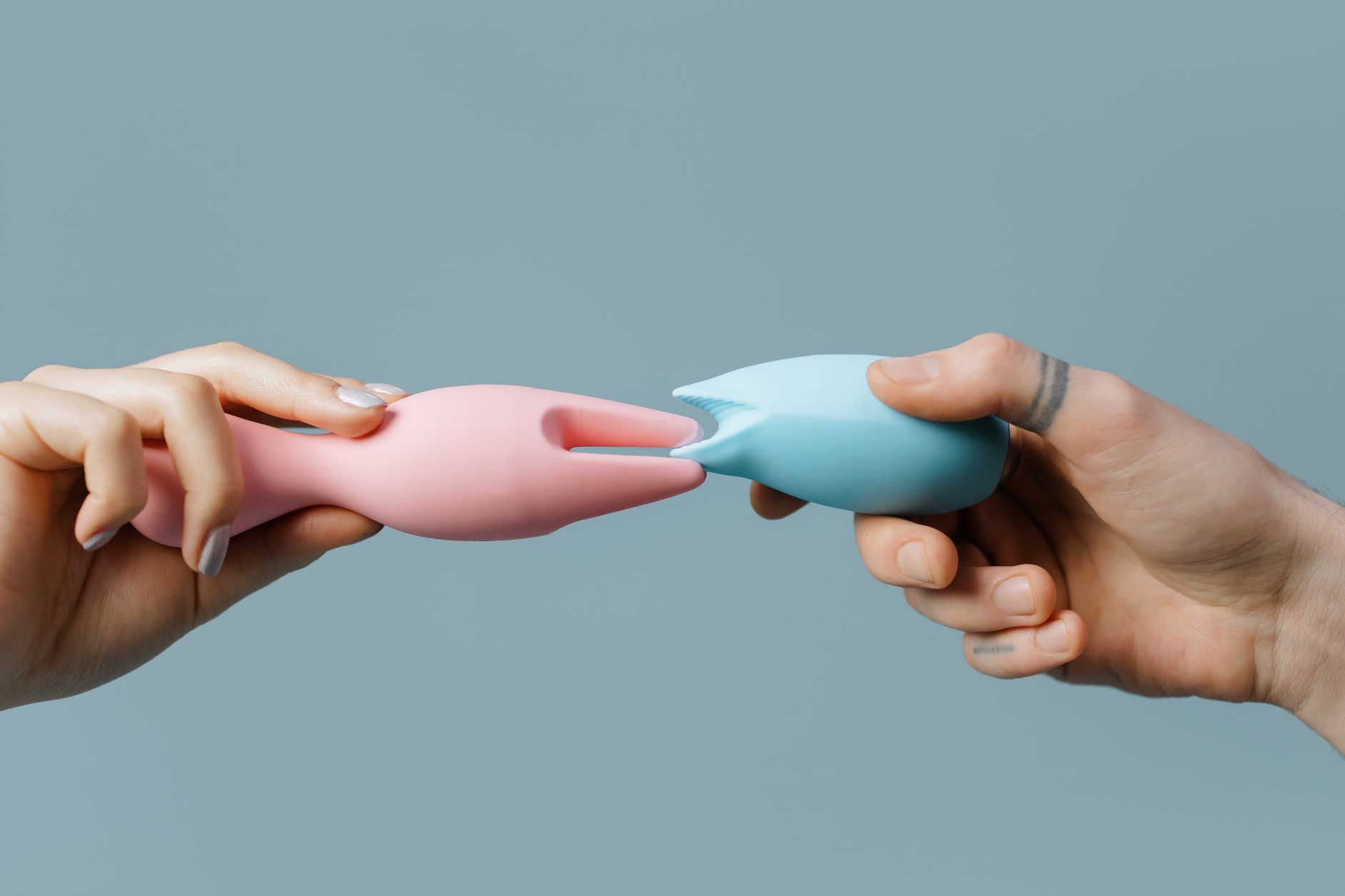
Penetration feels amazing. And also, for roughly 70% of people with vulvas, it doesn't produce an orgasm on its own. That's not a flaw in your body. That's anatomy. The clitoris has 8,000 nerve endings concentrated in an area the size of a fingertip. The vagina, by contrast, has relatively few. So expecting one to replace the other is like expecting your ear to work as well as your eyes.
Here's where couples play gets stuck. Many partners assume adding a vibrator means something's wrong. Or they think it replaces them. Neither is true. A lemon clitoral vibrator during couple's sex doesn't diminish intimacy. It actually creates the conditions for it. When both people are genuinely satisfied, connection deepens. When one person is faking it or going unsatisfied, resentment quietly builds.
The clitoris sits at a distance from the vaginal canal. During penetration, the angle, pressure, and rhythm rarely stimulate it enough to trigger orgasm. This isn't about arousal level or how attracted you are to your partner. It's geometry.
Add in real-life friction. Hormonal shifts change how quickly arousal builds. Stress narrows focus. Medication dulls sensation. Age changes responsiveness. Any of these factors alone can make the gap between "this feels good" and "this makes me come" wider than usual.
Most couples solve this one of two ways. One person fakes it, and both people pretend that's fine. Or they abandon penetration altogether in favor of external stimulation. But there's a third option: integrating lemon vibrators into penetrative sex so both sensations happen at once.
Before the vibrator touches anything, you need a three-minute conversation. Not romantic. Just practical.
The person with the vulva says: "I love being inside you. I also can't reliably come from just that. I want to use a vibrator during, not instead." Or: "Sometimes I need help getting there. I don't want to stop what we're doing." The tone matters less than the specificity.
The partner listens, then asks a clarifying question. "What does help feel good?" or "Do you want me to use it, or would you rather?" This conversation takes pressure off both people. It turns a potential awkwardness into logistics.
Most couples skip this step because they assume the vibrator will be weird or rejection. It's almost never either. Most partners are relieved to have a clear answer to "what actually works for you?"
Three positions work especially well with lemon clitoral vibrators.
Position one: You on top. You control depth, angle, and speed. Your partner can easily reach your clitoris with the vibrator, or you can hold it against yourself while they move inside you. This gives you autonomy over stimulation intensity while maintaining full-body contact. Many people find this angle lets them come during penetration for the first time because the vibration plus the internal pressure create enough dual stimulation.
Position two: Lying on your back with your partner inside you. Your partner can hold the lemon vibrator against your clitoris while thrusting. The key is starting at a lower intensity (pattern 1 or 2 on most lemon vibrators) and letting your partner increase it as you approach climax. If the rhythm is too intense, your body tenses up and climax becomes harder, not easier. Slower build works better.
Position three: Side-by-side. This one feels the least goal-oriented. You're facing each other, can kiss, make eye contact. One person holds the vibrator while the other moves inside. There's less depth than some positions, but the intimacy often compensates. Couples who are disconnected or rebuilding trust often prefer this because you're genuinely present with each other instead of locked into a mechanical rhythm.
Start with whichever position already feels good to you both. The vibrator isn't meant to overhaul your sex life. It's meant to solve the specific problem: "I want you inside me, and I also need external stimulation to come."
Honestly though, most couples get this wrong the first time. They sync the thrusting and vibration. It's intuitive. It doesn't work. Your nervous system can't process two rhythms hitting at the same tempo.
Instead, keep one rhythm consistent and slow. If your partner is thrusting in a steady, moderate pace, the vibrator should stay still or move in small circles, not match the thrust speed. Think of it as two separate songs playing at the same time, not a duet.
As you get closer to orgasm, the vibration tempo can increase, but the thrusting usually stays steady. This is the opposite of the performance-sex rhythm most people learned. But it works because your clitoris and your vagina have different optimal stimulation patterns.
This comes up constantly. One partner is enthusiastic. The other feels insecure, thinks toys mean they're not enough, or just isn't convinced it'll feel good.
The person who wants to use it should ask: "Would you be willing to try it once just to see?" Not to convince them it's amazing. Just to get past the idea of it. One time, low pressure, no expectation of immediate results.
Most resistance dissolves after the first attempt. People realize it doesn't change the intimacy. It actually improves it. When their partner becomes more satisfied, the pleasure usually becomes contagious. Arousal is responsive. If you're genuinely enjoying yourself, your partner notices.
If after one honest try they still don't want to participate, that's different. But "I haven't tried it" is a different conversation than "I've tried it and I don't like how it changes things."
Not all vibrators work equally well during penetration. You want something that doesn't take up space. Most suction vibrators like the Lemon Clitoral Vibrator work well because the suction cup creates consistent stimulation without requiring you to hold it in place.
Look for a toy with variable intensity. You'll want to start quiet and low, then adjust as needed. Waterproof is helpful because things get wet. And honestly, something aesthetically pleasing matters more than people admit. If you like looking at it, you'll use it without shame.
Take your time choosing. This isn't an emergency purchase. You're investing in an experience you'll hopefully repeat for years.
Using a vibrator together is vulnerable. You're literally saying "here's what my body needs." And your partner is choosing to participate in that need. That's intimate in a way that's actually deeper than the mechanics.
Sometimes the first time doesn't work. Pressure builds. Your body doesn't cooperate. You come close but not quite. That's normal. Sex that relies entirely on spontaneous performance-on-demand rarely works. Adding external stimulation removes some pressure, but it doesn't remove all of it.
If something feels off, you can pause and try again later. You can laugh. You can adjust the angle. You can slow down. The goal isn't a perfect scene. It's genuine shared pleasure.
First, the person with the vulva actually comes. Consistently. Without faking. That alone changes the dynamic because now both people's pleasure is real, not one person's imagination.
Second, the person providing penetration feels more connected because they can see and feel their partner actually enjoying what's happening. When orgasm is real, your whole body responds. They notice.
Third, the pressure lifts. Sex stops being a performance where one person is waiting to come while the other is trying to make it happen. It becomes something you both experience in real time. That's when couples play becomes genuinely intimate instead of a logistical exercise.
Sex conversations feel formal because we rarely practice them. Here are three scripts that work.
Script one: "I want to try something." Just that. Then show them the vibrator. Most partners respond with curiosity, not rejection. You're not asking permission. You're sharing something you want to explore together.
Script two: "I need a little help coming." Direct, specific, not blaming. You're naming a physical need, not a failure. Your partner probably wants you to come. They just need to know how.
Script three: "Can you hold this while I'm inside you?" If they're willing but unsure how to use it, give them specific instructions. Clarity reduces anxiety.
If your partner responds with rejection or shame, that's a different conversation than logistics. That's about why adding pleasure to partnership feels threatening to them. And that might need more help than an article can provide. But most couples? They're just relieved someone said it out loud.
Your first time using a lemon vibrator together probably won't be your best time. Your nervous system is learning something new. Arousal builds differently. The sensations are unfamiliar.
Give it three or four tries before you decide if it works for you. By the third time, your body relaxes. The novelty wears off. Pleasure shows up. That's when you actually feel whether this enhances your sex life or doesn't.
For many couples, adding external stimulation transforms their intimate life. Not because the vibrator is magic. Because they finally solved the problem that's been quietly eroding their connection. And now they can actually both enjoy what's happening.
No. Using a vibrator during couple's play means you're getting the full experience your body needs. That's actually more connected, not less. If your partner resists, you can ask why they think their presence is only valuable when you're not satisfied. Usually that conversation reveals something worth exploring with them.
Insecurity usually comes from misunderstanding. Most partners worry the vibrator means you'd rather be alone. Tell them directly: "This isn't instead of you. It's with you. I want to feel this with you inside me." Then show them how it works. Seeing it firsthand usually dissolves the anxiety.
You've already had harder conversations. You've navigated disagreements, disappointment, maybe infidelity or financial stress. You can say, "I want to improve our sex life. I think using a vibrator during penetration might help." That's honest and collaborative. Frame it as solving a problem together, not criticizing what you already do.
Positions where you're on top or lying back work best because your partner can reach your clitoris easily. Side-by-side also works if you want maximum intimacy and less depth. Experiment with what feels natural for your bodies.
Not in the way most people fear. Your clitoris doesn't get "used up." But if vibration is the only stimulation you use, your body does adapt to it. Varying stimulation (hands, mouths, vibrators at different intensities) keeps sensation responsive. That's actually an argument for integrating vibrators into partnered play rather than relying on them solo.
Look for something compact that doesn't require holding in place while penetration is happening. Suction vibrators like the Lemon Clitoral Vibrator work well because they stay put. Variable intensity matters so you can start low and adjust. Most importantly, choose something you both find aesthetically appealing so you're not hiding it away.
Penetration is beautiful. So is clitoral stimulation. When you combine them intentionally, most people experience more pleasure than either alone. That's not complicated. That's just smart design.
Most couples who integrate vibrators into their intimate life report deeper connection, more regular orgasms, and less pressure around performance. The vibrator isn't the point. Genuine shared pleasure is. The vibrator just makes it possible.
If you're stuck in a pattern where one person comes and the other doesn't, or where penetration leaves you unsatisfied, adding external stimulation isn't a failure. It's a solution. And solutions that actually work deserve to be used, without shame or second-guessing.